Country in the South Caucasus region
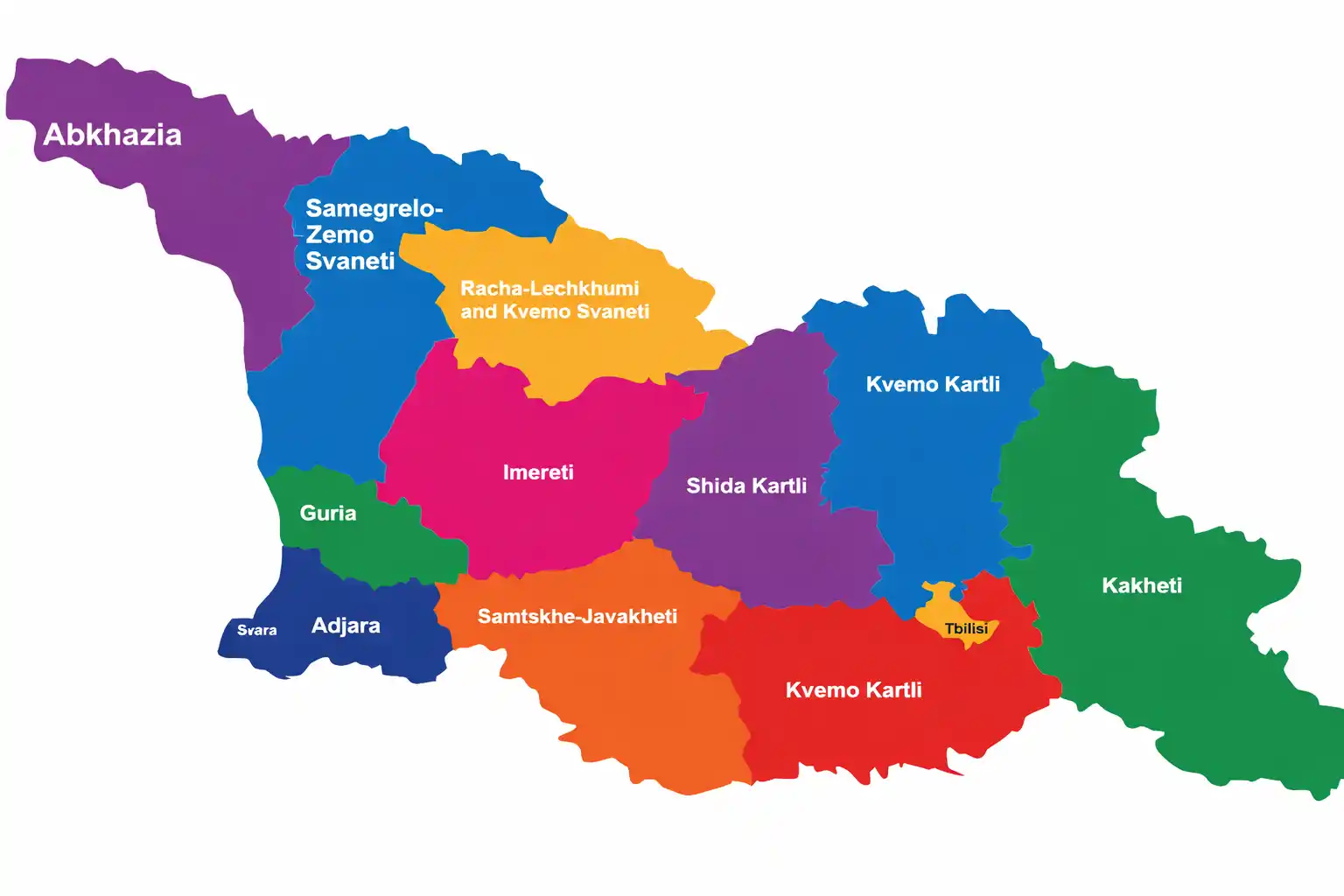
Tbilisi is the capital of the country of Georgia. Its cobblestoned old town refects a long, complicated history, with periods under Persian and Russian rule. Its diverse architecture encompasses Eastern Orthodox churches, ornate art nouveau buildings and Soviet Modernist structures. Looming over it all are Narikala, a reconstructed
4th-century fortress, and Kartlis Deda, an iconic statue of the “Mother of Georgia.
Located on the coast of Black sea Batumi is the 2nd largest city of Georgia. The city population is around 180 thousand and is known as the most beautiful city in Georgia. Batumi is a popular tourist destination where many visitors from all over the world come to see the city’s stunning botanic gardens, the Alphabetic Tower, and the 9-kilometer-long beachfront boulevard. Batumi is characterized by favourable climatic conditions with the average annual temperature of approximately 14 °C. Batumi has an international airport and is well connected with major cities of the world. It’s Safe and secure environment with affordable living makes Batumi a perfect place for Students. BAU International University and Batumi Shota Rustaveli University are main Universities in Batumi.
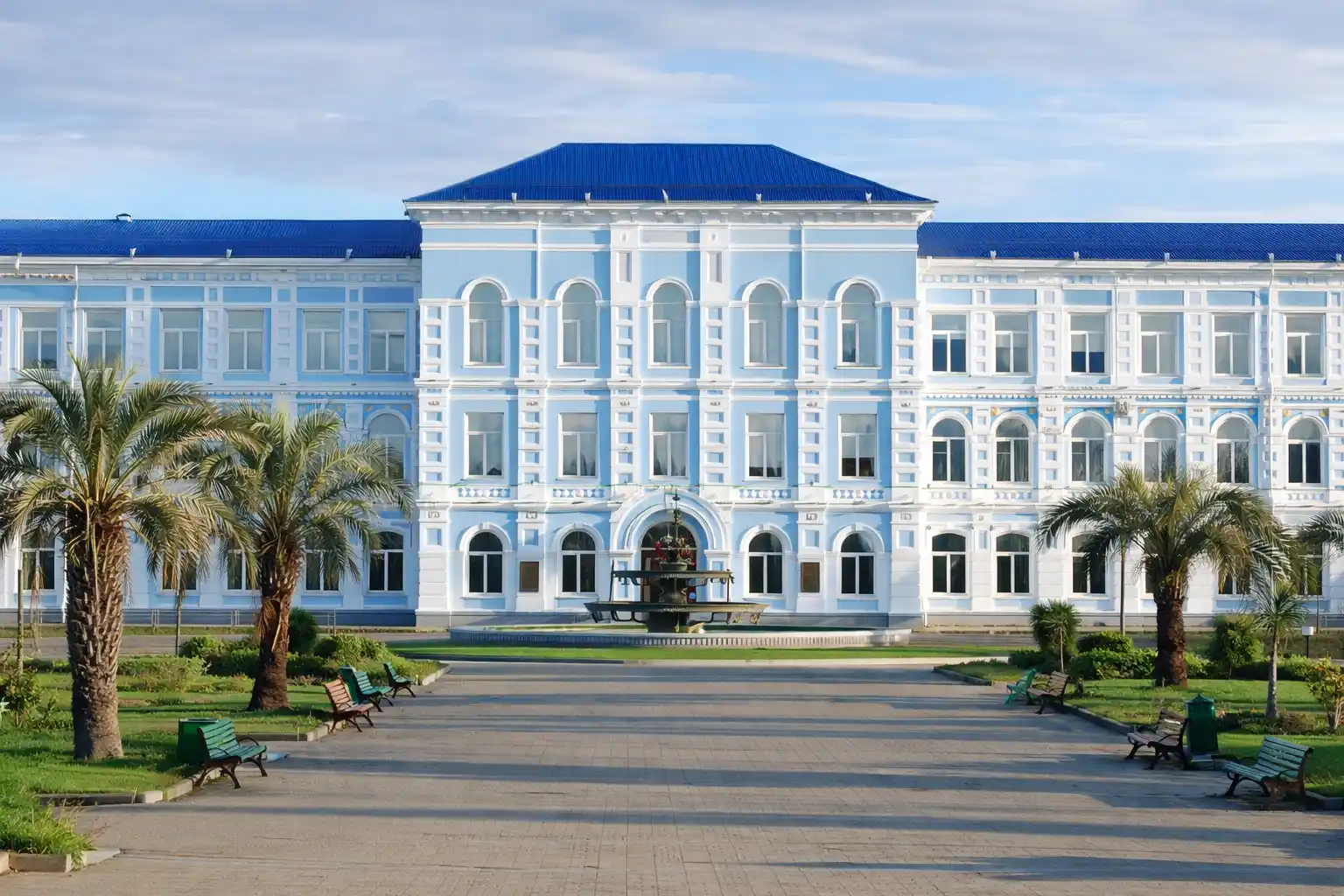
Batumi Shota Rustaveli State University is an important educational, scientific and cultural center of our country. It has a 79-year-long history. The establishment and development of the educational system in Adjara was a long-time endeavor of the Georgian community. In 1893 the issue was raised to open a Boys’ Gymnasium in Batumi. On 26-27 June, The Boys’ Gymnasium started functioning in July, 1897. By the Decision N°453,3 September, 1990 of the Cabinet of Ministries of Georgia Batumi State University was established on the basis of Batumi Pedagogical Institute. As a result of the educational reform in the country the university was transferred to a two-cycle teaching: Bachelor and Master Levels were created. Post-graduate studies also were functioning for certain specialties. 6000 students study at the vocational, Bachelor, Master and Doctoral programs.
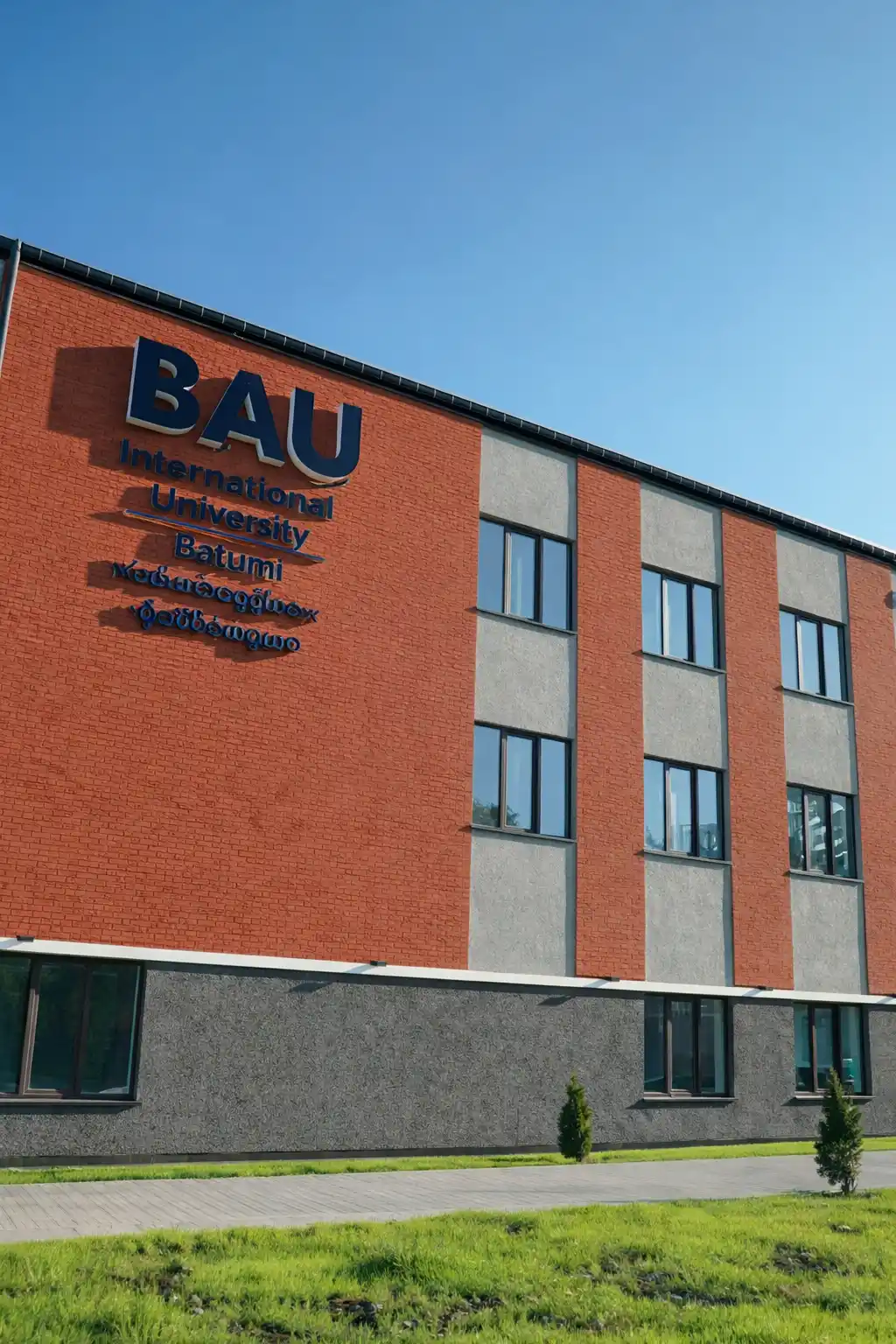
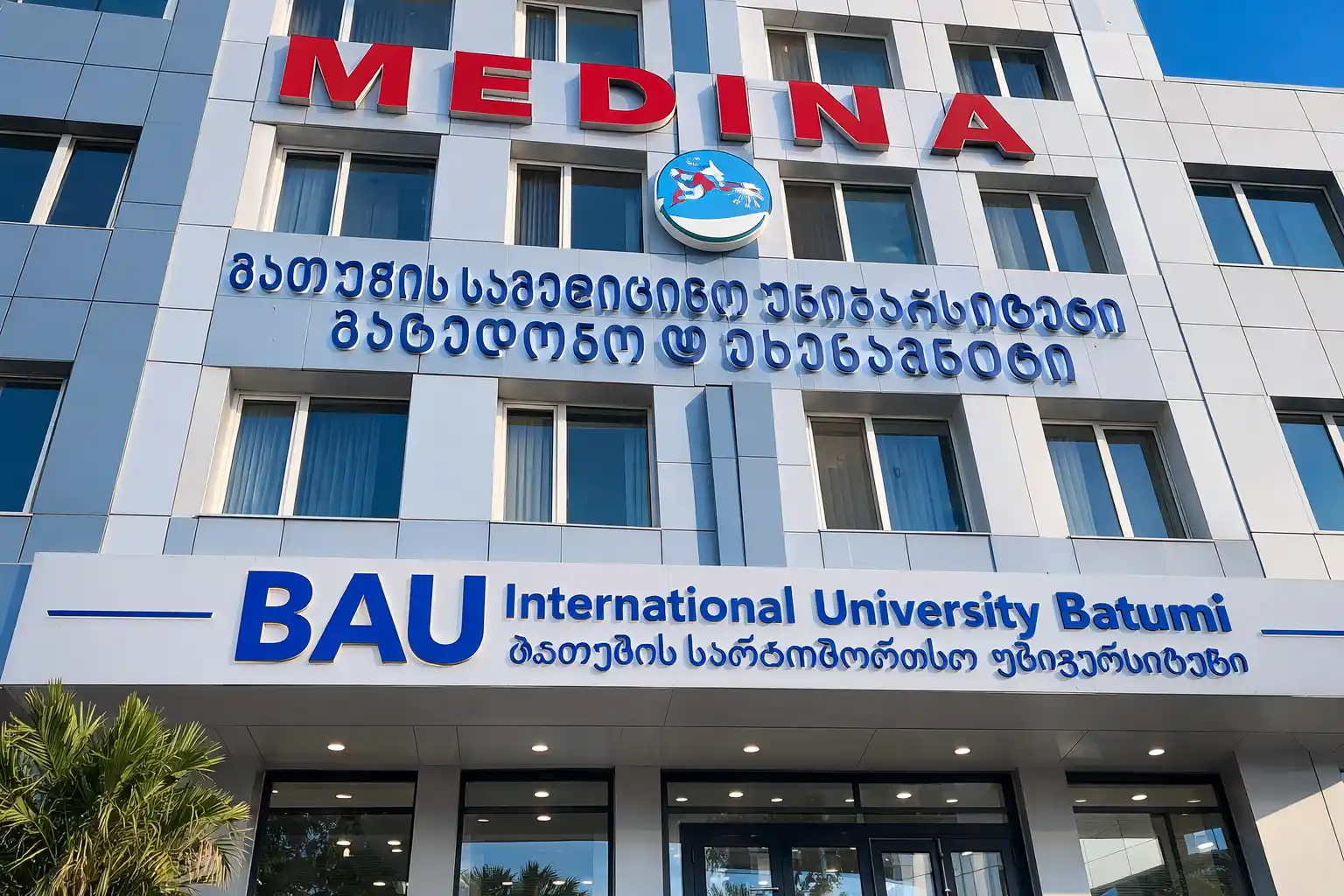
BAU International University is a premier University in Georgia offering high quality medical education to citizens of all countries around the world. University is a part of the BAU Global Network which is comprised of 8 Universities, 16 liaison offices and 4 language schools spread in 9 countries over 4 continents. University provides best education for medical students, as they receive ample amount of clinical exposure and it is the only university in Georgia that offers cadaver dissection in anatomy. The university has world-class infrastructure, including modern facilities with cutting-edge technology, laboratories, classrooms, and mannequin simulation stations. University has a strong and well experienced academic faculty, In addition University Hosts Guest lectures from International faculty. The University has been enlisted in the World Health Organization (WHO) world directory of medical schools from the very first year of establishment. It has a multicultural environment that allows students to meet friends and future colleagues from all over the world with different culture, traditions and background coming from various parts of the world. BAU also offers Scholarship to its meritorious students. Free USMLE Coaching is also provided by University. BAU International University, Batumi is the only university in Georgia offering cadaver dissection in anatomy University Highlights
1. Only University that Provides Cadaver Dissection in Georgia.
2. Clinical Experience From First Year
3. USMLE Coaching
4. Clinical rotations in Hospital MEDINA.
Caucasus international University, established in the year 1995, is a higher education institution imparting MBBS education in Georgia. Caucasus international University is one of the biggest medical university in Georgia. It recognized by WHO, MCI, and many more international professional groups. Caucasus international University has formed into a huge scale, a well-managed comprehensive university with good Medical teaching staff. It has an advanced system of medical education, and it trains students with the help of updated education technology of MBBS study. The university embraces the high-tech methods of practical medicine that empower students to be focused, competitive and Flexible in the world market. Currently, an area of approximately 17,000 sq.m. used for academic purposes. CIU facilities include: student cafeteria, sports facilities, library equipped with electronic technologies and book collections that consist of modern literature published in Georgian and other foreign languages, CIU multimedia center, laboratories of biochemistry and microbiology, and a clinical skills development center equipped with modern technology, the anatomy study room is equipped with modern molding machines, scientific-research laboratory of neurosciences and applied physiology, phantom rooms, dental clinics for CIU students and residents, a simulated courtroom and a legal clinic.
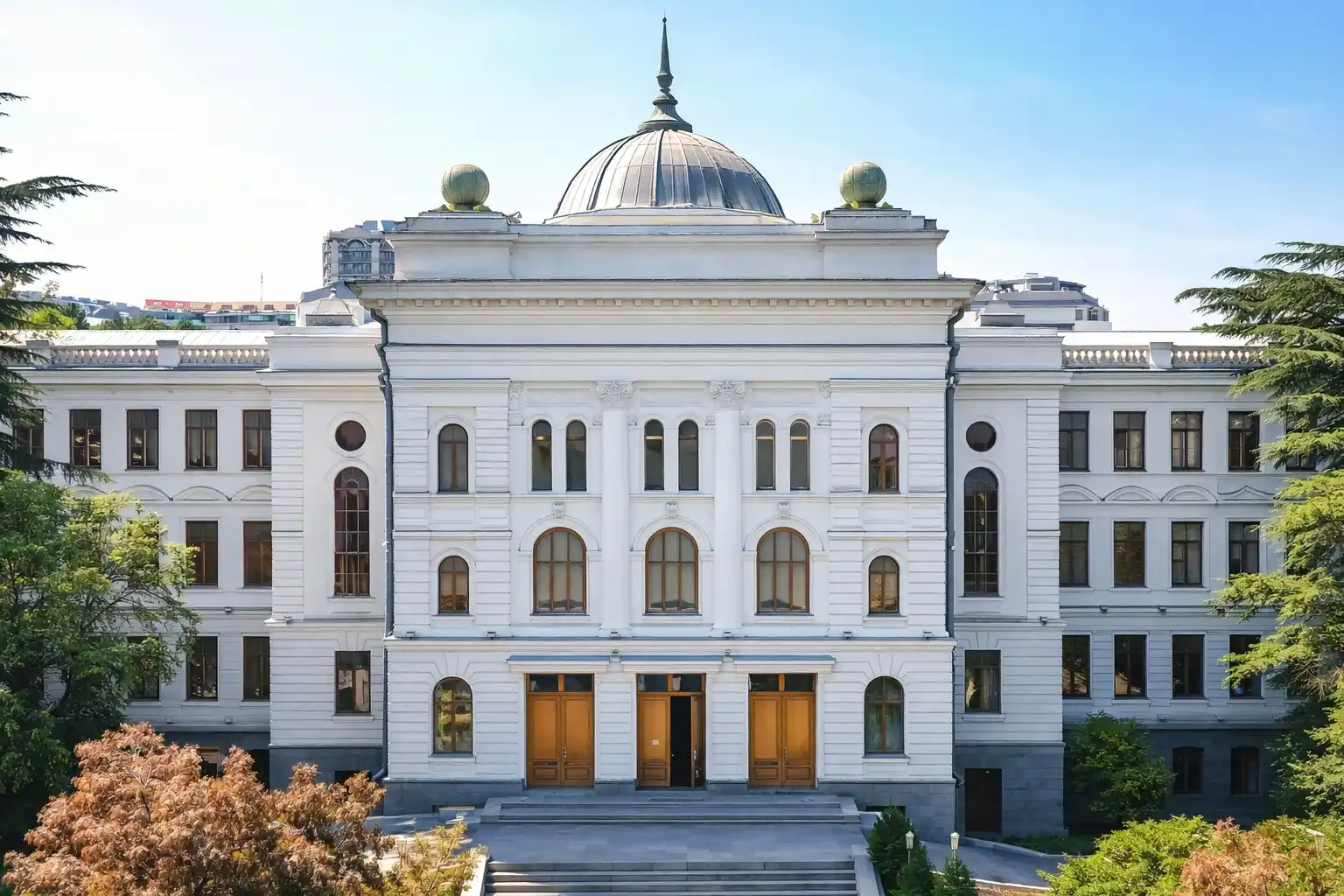
Ivane Javakhishvili Tbilisi State University (TSU) is the first national university in Georgia
and the first higher education institution in the South Caucasus region. It established
formal education in the country, created the local intellectual workforce and paved the way for human development and democracy. For over 100 years TSU has granted degrees to men and women and promoted the ideals of equality, justice and progress. The University was founded on February 08, 1918 as a comprehensive European-style higher education institution. Majority of its 12 founders had received higher education in the European countries and brought their knowledge, experience and contacts to TSU, thus establishing the Georgian higher education system on truly Western values. Being a national university, TSU has always delivered schooling in Georgian language making it the only institution of higher education to do so in the former Russian empire. The Centennial anniversary of Tbilisi State University, celebrated nationwide, was an event organized under the auspices of UNESCO.
The history of higher medical education originates from October 1918 when the Faculty of Medicine was established at the Tbilisi State University. Since May 1919, by decision of the Board of Professors, the Medical Faculty continued to exist as an independent unit until 1930 when the Tbilisi State Medical Institute was founded on the basis of the Medical Faculty. Ivane Javakhishvili Tbilisi State University is one of the top Public universities in, Georgia. It is ranked #571-580 in QS Global World Rankings 2022.
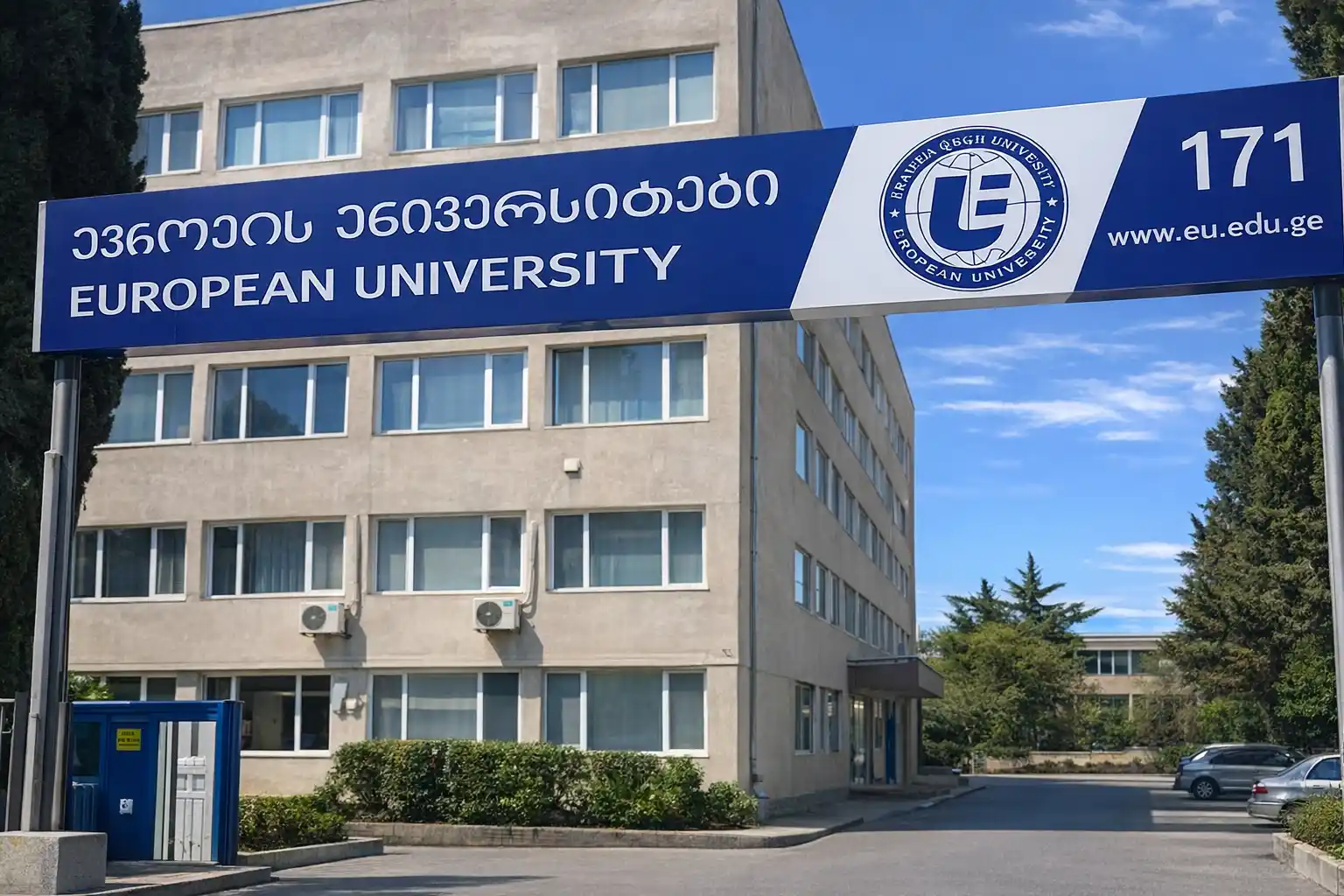
European University is an authorized higher education institution with the status of an
educational university, which implements higher education programs in accordance with the rules established by law and issues a certificate of qualification recognized by the state.
The Faculty of Medicine of the European University has been operating since 2014. The aim of the faculty is to ensure the training of students in the field of health care in terms of academic freedom and institutional autonomy.
The teaching process at the faculty is led by well-known and recognized specialists in the field, who have many years of medical and pedagogical experience. A variety of teaching and assessment methods provide the opportunity to master at not only theoretical knowledge but also practical skills.
The Faculty of Medicine has signed cooperation agreements with about 60 clinics in Georgia, as well as with medical universities of different countries around the world. Professors and students of the Faculty of Medicine are members of various international.
scientific and professional associations. Based on all the mentioned above, apart from the practical training provided by the program, students have the opportunity to have clinical practice at various university clinics around the world, also to get involved in ongoing research projects at the faculty and participate in local and international scientific events. The student scientific journal “Biomedical and Core Clinical Research Practice” has been published since 2020. There is a simulation center at the faculty, where clinical / sectoral skills are taught and assessed through modern medical technologies, mannequins in a simulation clinical environment.
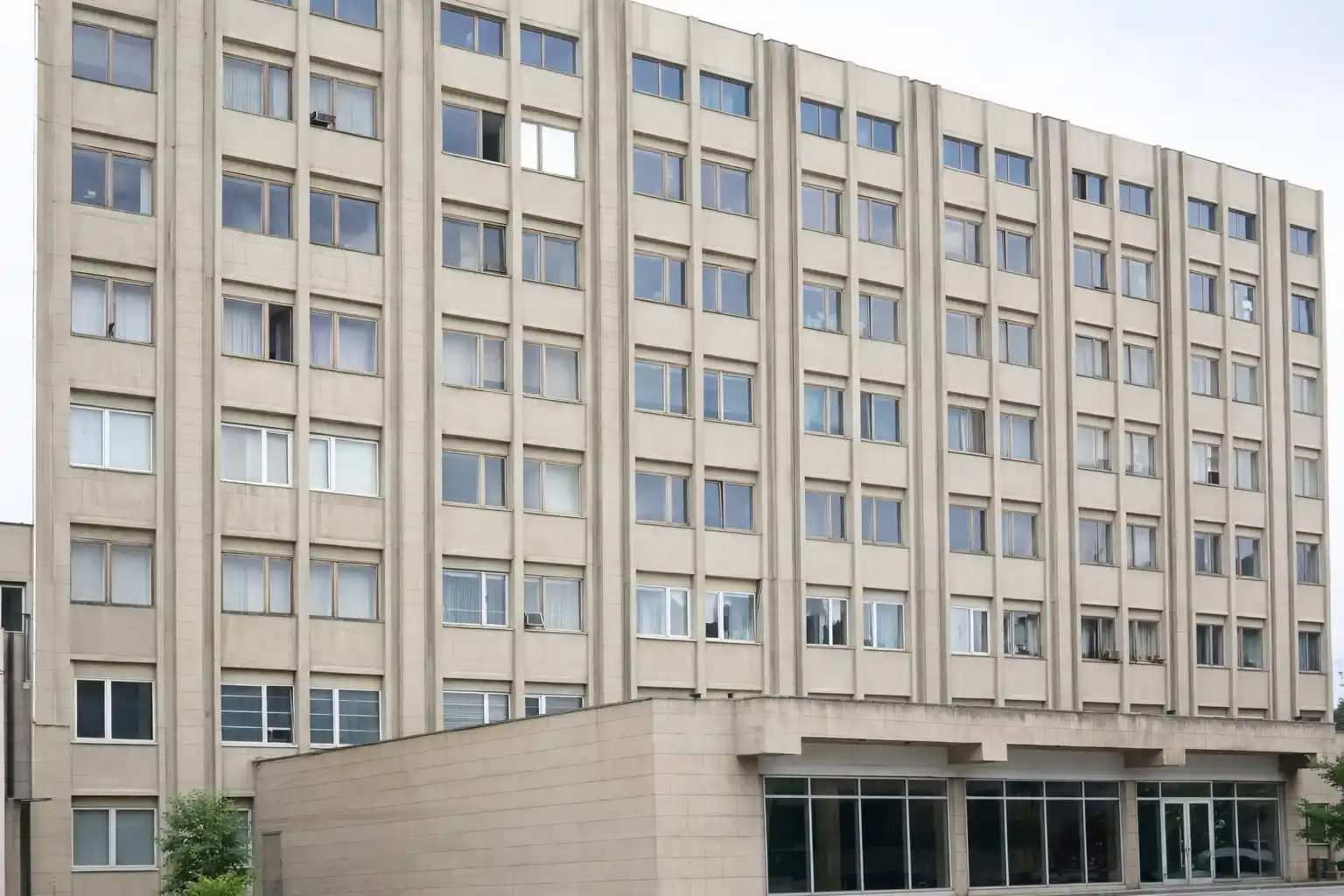
Tbilisi State Medical University was solemnly opened on 8th of February, 1918 (old style 26th of January), the day of remembrance of the Georgian King David the Builder. Since that, this day remains one of the most significant events in the history of the nation.
The Tbilisi State Medical University (TSMU) is the main center of higher medical education in Georgia, with an almost hundred-year history. Actually, higher medical education in Georgia is of the same age as well. It is noteworthy to emphasize that thousands of our university graduates continue their professional careers in many leading clinics and institutions of Georgia, Europe and the world as a whole.
English-Medium Medical Faculty was independently established in 1996 on a Medical Faculty base. The Faculty of Medicine was established in 2006 on the base of the Faculty of Medicine, Pediatrics, Psychotherapy, Psychosomatic Medicine and English Medical Faculties.
| Batumi Shota Rustaveli State University |
| Georgian American University |
| BAU International University |
| Ivane Javakhish Tbilisi State University (TSU) |
| European University |
| Caucasus International University (CIU) |
| Tbilisi State Medical University |
| Akaki Tsereteli State University |
| New Vision University (5 yrs) |
| David Tvildiani Medical University |
| David Aghmashenebeli University |
| Geomedi State University |
| Ken Walker International University |
| SEU Georgian National University |
| Grigol Robakidze University (5 Yrs) |
| Georgian National University (SEU) |
| Petre Shotadze Tbilisi Medical Academy |
| ILIA State Medical University |
Secure your admission in globally recognized universities with complete end-to-end support — from counselling to campus arrival.